CIAGRO-UMH · Research group
GICOMVEG: materials from plant waste
Development of sustainable boards and building materials from agricultural plant waste.

Project description
Building materials from plant waste
Discover CIAGRO’s GICOMVEG Research Group
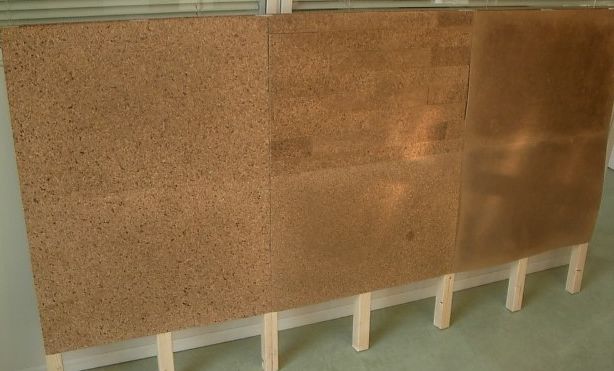
Partition element made with particleboards from Canary Island palm waste
- Valorisation of plant waste to create non-polluting, easily recyclable products for construction.
- Transforming waste into building materials, reducing environmental impact.
- Development of products without chemical adhesives and detailed life-cycle analyses.
The Research Group on Building Materials from Plant Waste (GICOMVEG) has taken on the challenge of revolutionising the construction sector through the valorisation of plant waste. Its main focus is to obtain new products with lower energy consumption in their manufacture, avoiding toxic adhesives such as urea-formaldehyde and promoting easy recycling at demolition.
The group, which carries out its studies at the Institute for Agri-Food and Agri-Environmental Research and Innovation (CIAGRO), uses innovative technologies such as the production of particleboards without chemical adhesives, a significant advance for the industry as it avoids toxic components. They also focus on energy optimisation in the manufacturing process, continuously assessing its equivalence in environmental pollution.
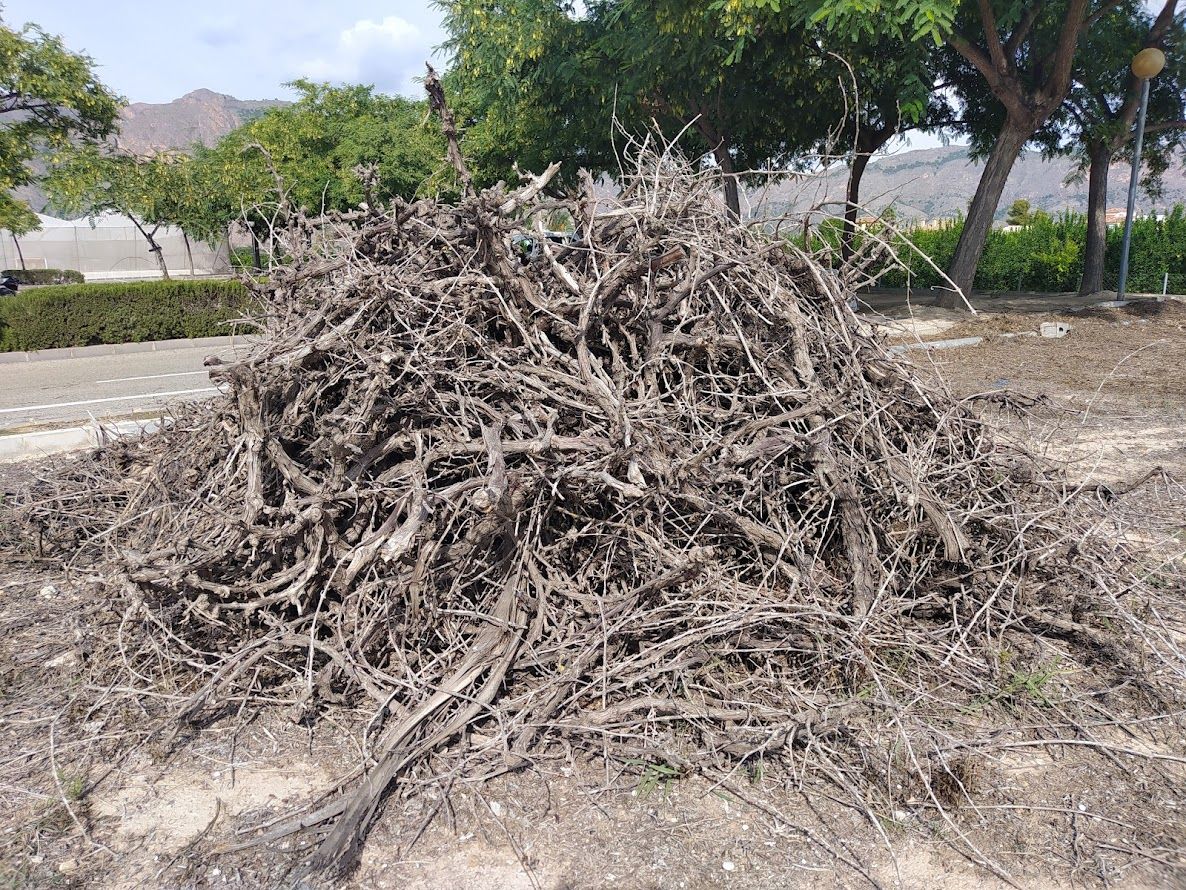
Agricultural waste (vine prunings)
GICOMVEG’s differentiating factor lies in its ability to obtain building materials from plant waste, bringing more than 14 years of experience and using local resources to foster the circular economy.
The group’s most notable contributions include research projects, papers at national and international conferences, publications in high-impact journals and the supervision of doctoral theses, demonstrating its leadership and commitment to scientific progress in this field.

Packaging made with particleboards from mulberry pruning waste
The social and environmental impact of its projects is significant: avoiding deforestation, providing durable and biodegradable materials, clearing invasive plants from rivers and fields, and preventing the eutrophication of water bodies. In addition, its focus on environmental protection has direct implications for CIAGRO’s development strategy and sustainable agriculture.
The key message GICOMVEG seeks to convey is its commitment to the circular economy of agricultural and plant waste, providing sustainable solutions for construction and the environment in general. Its work is aimed at continuously improving building materials and their impact on society’s quality of life.
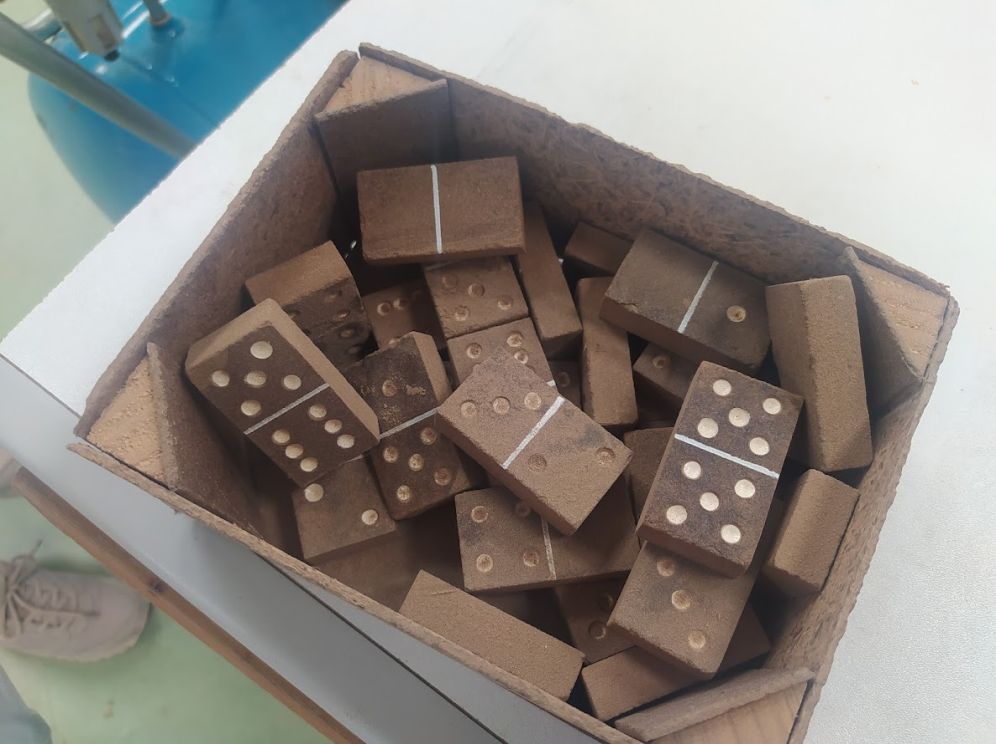
Domino pieces made from Canary Island palm waste
Leaflet