
Project description
Transforming agriculture with sustainable innovation
Discover the Fruit Growing and Production Techniques Research Group

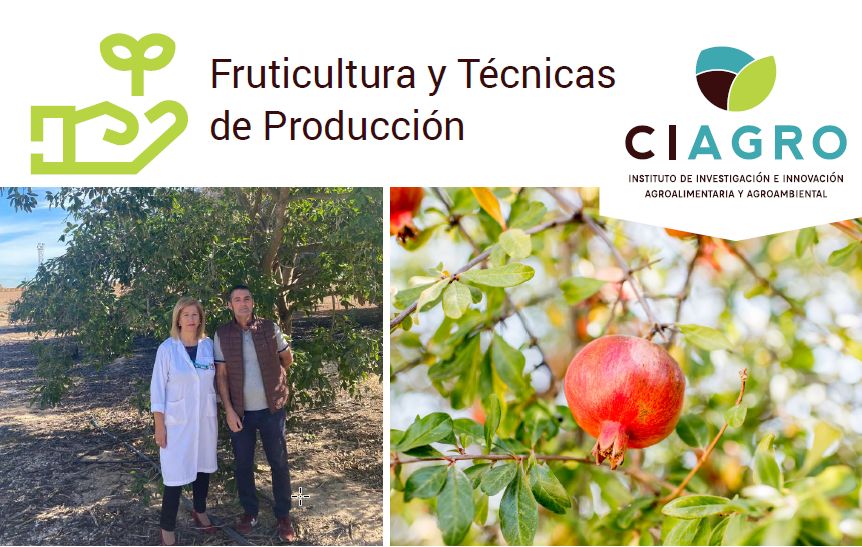
Researchers of the CIAGRO-UMH Fruit Growing and Production Techniques Group
- Transfer of agronomic knowledge for the sustainable evolution of agriculture.
- Application of innovative techniques to optimise crop productivity and quality.
- Notable contributions: species conservation and environmental solutions for agriculture.
At the heart of the Institute for Agri-Food and Agri-Environmental Research and Innovation (CIAGRO) is a pioneering group: the Fruit Growing and Production Techniques Research Group. Its main mission lies in the transfer of knowledge in the field of agronomy to companies and farmers, with the aim of promoting sustainable development in agriculture.
The role of these researchers within CIAGRO-UMH is twofold: on the one hand, they provide specialised knowledge in agronomy and, on the other, they take an active part in multidisciplinary projects that seek to meet society’s needs. Their approach focuses on the application, valorisation and improvement of sustainable agronomic techniques in woody crops, with the goal of increasing productivity and improving fruit quality.
What sets this group apart is its extensive experience in sustainable and innovative agronomic practices that generate economic and social value. Among its most notable contributions is the conservation and valorisation of underused species, some of them endangered. These species have crucial potential to increase biodiversity in Mediterranean fruit growing.
Their research is not limited to theory: they have shown that bioremediated sediments from seaports can be a viable alternative for growing both woody and horticultural species. These advances not only have an impact on the agricultural sector but also contribute to the environment, reducing the environmental footprint and valorising endangered resources.

Monitoring apricot trees at the “Agua Amarga” farm of IMIDA (Murcia Institute for Agricultural and Environmental Research and Development)
The social and environmental impact of its solutions and projects is significant. They have contributed to the survival and profitability of crops, improving agricultural production and reducing environmental impact. They have also prevented the relocation of crops and promoted the sustainable use of resources.
This group sees itself as the first link in the agri-food chain and is key to the sustainable development of the sector. Its application of sustainable and innovative agronomic practices will reduce the water footprint, improve crop productivity and quality and valorise fruit species. This will contribute significantly to progress towards more efficient and sustainable agriculture.
The central message they want to convey is the commitment they have built over more than 25 years of research in agriculture. Their goal is to move towards more efficient, sustainable agriculture that generates greater added value. In short, they aspire to an agriculture that consumes fewer resources, generates a better quality of life in rural areas and produces food more efficiently and sustainably.