
CIAGRO-UMH · AVI regional project
OPTIFANGS
Optimisation of sewage sludge (WWTP) dosing in agricultural soils using sensors and artificial intelligence. Project co-funded by the Valencian Innovation Agency (AVI).
Project website: optifangs.es
Project description
OPTIFANGS makes it possible to optimise the dosing of WWTP sludge in agricultural soils, maximising benefits and minimising environmental risks.
OPTIFANGS helps reduce excess nutrients in agriculture in compliance with European regulations, improving soil carbon sequestration through new disruptive techniques linked to digitalisation, sensors and Artificial Intelligence.
The OPTIFANGS project develops a tool called Agroresources that makes it possible to calculate a sufficiently accurate estimate of the agronomic and environmental composition of WWTP sludge by measuring its NIR fingerprint. This makes it possible to model the behaviour of the sludge under different conditions and optimise its dosing in agricultural soils. In this way, the tool enables dosing decisions to be made almost in real time.
Technologies
The project uses advanced instrumental techniques such as near-infrared spectroscopy or NIRS (Near Infrared Reflectance Spectroscopy), Fourier-transform infrared spectroscopy (FT-IR) and thermal analysis. These techniques provide a kind of ‘fingerprint’ of the analysed material, from which a sufficiently accurate estimate of the agronomic and environmental composition of the specific material can be extracted.
Modelling
Modelling the analysed sludge under different conditions facilitates real-time management and dosing decisions and significantly improves process optimisation. For this analysis, chemometrics is used, a discipline of artificial intelligence (AI) that combines the value of ‘chemical’ and ‘analytical’ intelligence and enables feature extraction based on model optimisation.

Sludge management
The development of these tools will enable decentralised sludge management, resulting in a lower environmental impact. The expected results also point to a 25% reduction in excess nutrients not absorbed by crops linked to WWTP sludge, a 12% increase in carbon sequestered in amended soils, low-cost mitigation of emissions and odours, and the hope of implementing this Optifangs system in neighbouring countries.
The project is co-funded by the Valencian Innovation Agency (AVI). It involves 3 partners: Agricultores de la Vega de Valencia (SAV), Telenatura S.L. and the GIAAMA group of Miguel Hernández University.
Living Labs
COMPOLAB-EPSO
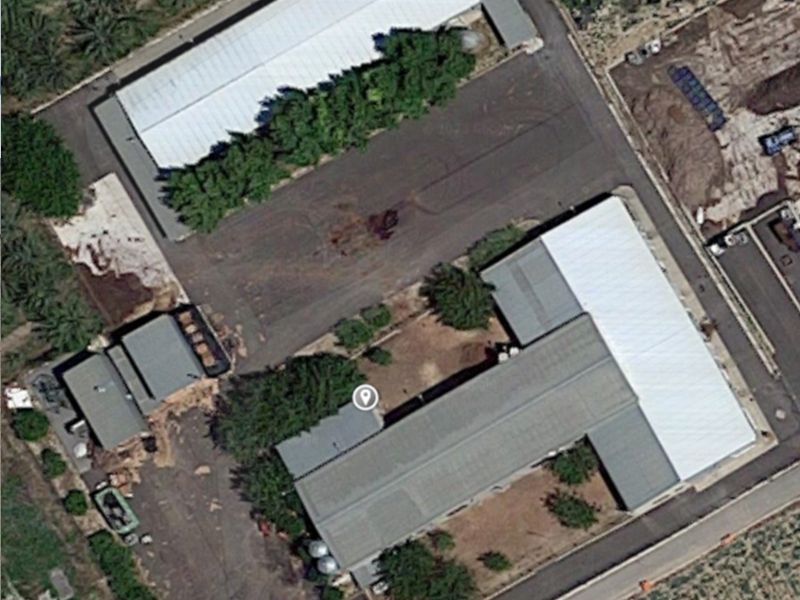
The first OPTIFANGS Living Lab is operational on the Miguel Hernández University (UMH) campus of Elche. Specifically, it is located at the UMH composting plant in Orihuela (Alicante).
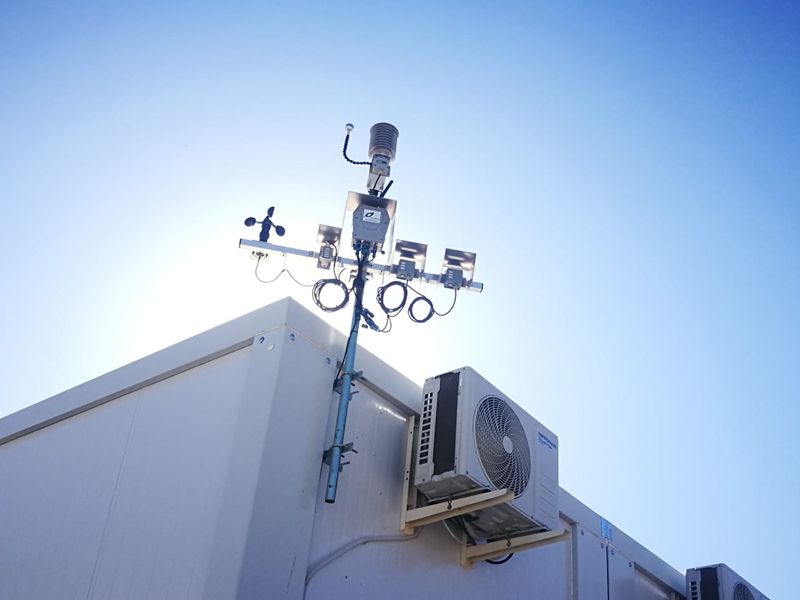
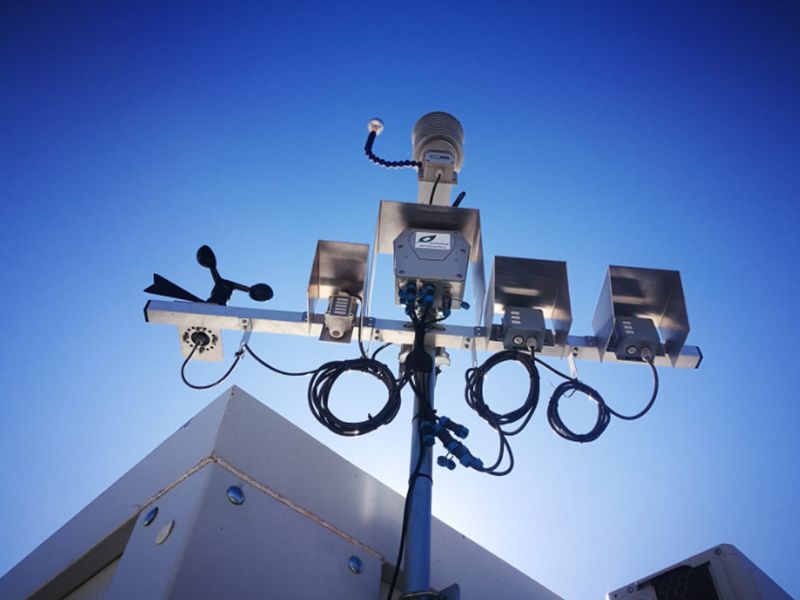
The Living Lab carries out advanced sensor work using prototypes developed specifically for OPTIFANGS. These are used to monitor emissions linked to water treatment plants, identifying different emission sources in the plant in terms of odours and greenhouse gases.
The gas measurement station measures three key process gases (CO2, NH3, H2S) and other environmental parameters such as air temperature, relative humidity, barometric pressure, wind speed and direction to generate a predictive gas control model.
The data collected by the station will enable visualisations and alarms in order to generate predictive scenarios and models that allow possible actions on gas emissions to be anticipated (Ruiz-Canales et al, 2022).
TELENATURA designed and built the low-cost emissions and odour monitoring station designed for composting plants and wastewater treatment plants.
Living Lab day: validation under real conditions
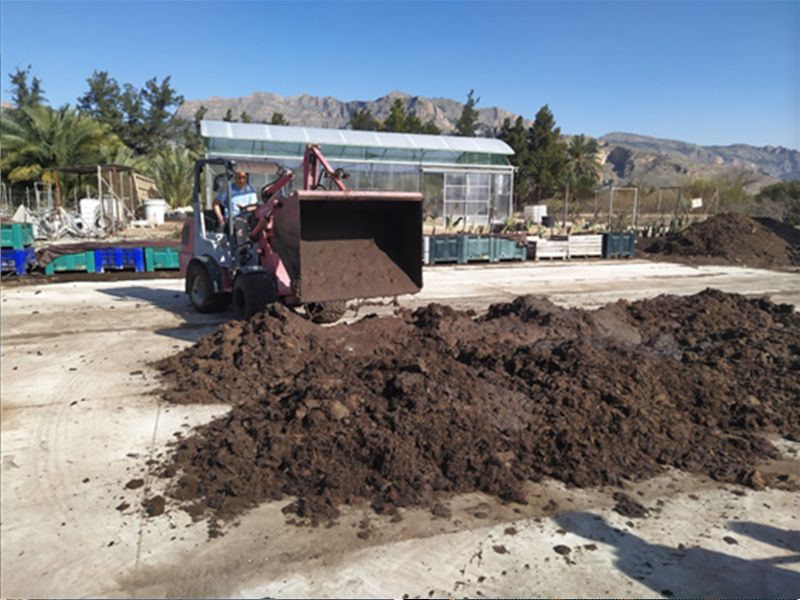
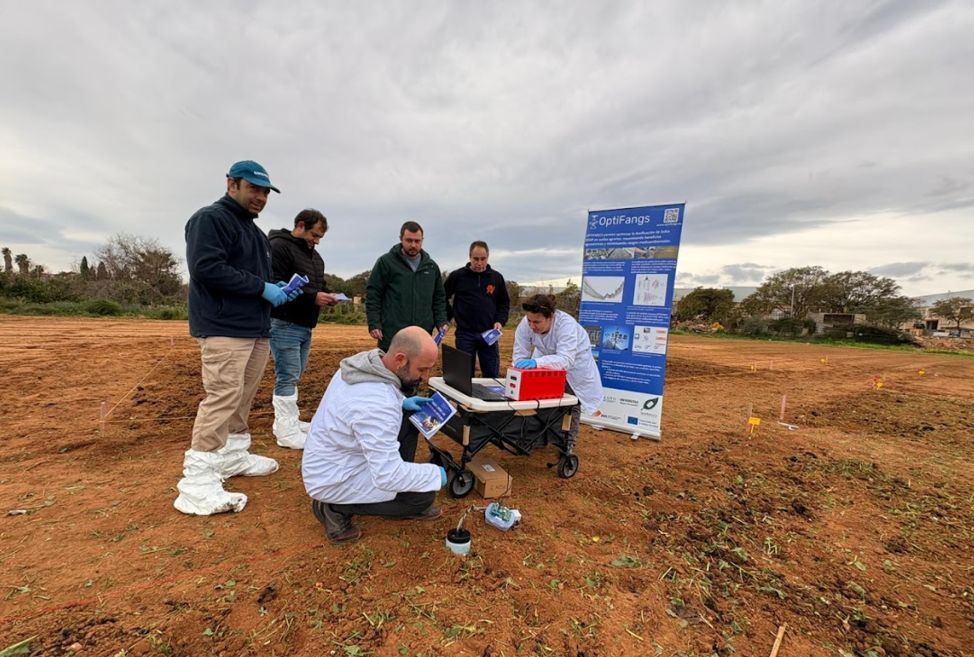
The Living Lab studied the application of sludge to agricultural soils. Participants were also able to see how greenhouse gas emissions are measured in the field for different sludge doses.
Project description
OPTIFANGS makes it possible to optimise the dosing of WWTP sludge in agricultural soils, maximising benefits and minimising environmental risks.
OPTIFANGS helps reduce excess nutrients in agriculture in compliance with European regulations, improving soil carbon sequestration through new disruptive techniques linked to digitalisation, sensors and Artificial Intelligence.
The OPTIFANGS project develops a tool called Agroresources that makes it possible to calculate a sufficiently accurate estimate of the agronomic and environmental composition of WWTP sludge by measuring its NIR fingerprint. This makes it possible to model the behaviour of the sludge under different conditions and optimise its dosing in agricultural soils. In this way, the tool enables dosing decisions to be made almost in real time.
Technologies
The project uses advanced instrumental techniques such as near-infrared spectroscopy or NIRS (Near Infrared Reflectance Spectroscopy), Fourier-transform infrared spectroscopy (FT-IR) and thermal analysis. These techniques provide a kind of ‘fingerprint’ of the analysed material, from which a sufficiently accurate estimate of the agronomic and environmental composition of the specific material can be extracted.
Modelling
Modelling the analysed sludge under different conditions facilitates real-time management and dosing decisions and significantly improves process optimisation. For this analysis, chemometrics is used, a discipline of artificial intelligence (AI) that combines the value of ‘chemical’ and ‘analytical’ intelligence and enables feature extraction based on model optimisation.
Sludge management
The development of these tools will enable decentralised sludge management, resulting in a lower environmental impact. The expected results also point to a 25% reduction in excess nutrients not absorbed by crops linked to WWTP sludge, a 12% increase in carbon sequestered in amended soils, low-cost mitigation of emissions and odours, and the hope of implementing this Optifangs system in neighbouring countries.
The project is co-funded by the Valencian Innovation Agency (AVI). It involves 3 partners: Agricultores de la Vega de Valencia (SAV), Telenatura S.L. and the GIAAMA group of Miguel Hernández University.
Living Labs
COMPOLAB-EPSO
The first OPTIFANGS Living Lab is operational on the Miguel Hernández University (UMH) campus of Elche. Specifically, it is located at the UMH composting plant in Orihuela (Alicante).
The Living Lab carries out advanced sensor work using prototypes developed specifically for OPTIFANGS. These are used to monitor emissions linked to water treatment plants, identifying different emission sources in the plant in terms of odours and greenhouse gases.
The gas measurement station measures three key process gases (CO2, NH3, H2S) and other environmental parameters such as air temperature, relative humidity, barometric pressure, wind speed and direction to generate a predictive gas control model.
The data collected by the station will enable visualisations and alarms in order to generate predictive scenarios and models that allow possible actions on gas emissions to be anticipated (Ruiz-Canales et al, 2022).
TELENATURA designed and built the low-cost emissions and odour monitoring station designed for composting plants and wastewater treatment plants.
Living Lab day: validation under real conditions
The Living Lab studied the application of sludge to agricultural soils. Participants were also able to see how greenhouse gas emissions are measured in the field for different sludge doses.
